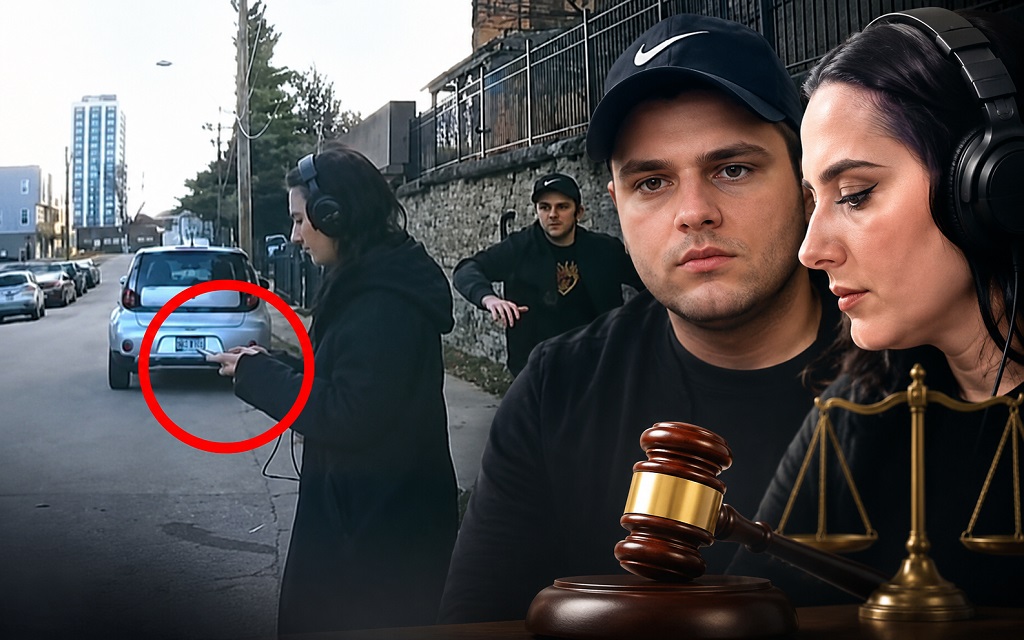
No. The “Daniel Reed and Jessica Moore” sexual harassment lawsuit is not real. No court case, arrest record, or police report exists under these names in Los Angeles or any other U.S. city. The story combines a real 2020 rescue video from Cincinnati, Ohio, with fabricated names, a false Los Angeles setting, and an invented harassment claim. Fact-checkers at Lead Stories and Yahoo News confirmed this in November 2025. Good Samaritan protections, not a harassment charge, apply to the real rescue shown in the footage.
Quick Facts
| Question | Answer |
|---|---|
| Is the lawsuit real? | No. No court record exists. |
| Who is really in the video? | Criss Allen, not Daniel Reed. |
| Where did the real event happen? | Walnut Hills, Cincinnati, Ohio. |
| When did the real event happen? | January 26, 2020. |
| When did the hoax start? | Late October 2025, on Instagram. |
| Who debunked it? | Lead Stories and Yahoo News. |
| Was anyone arrested or charged? | No arrest, no charge, no lawsuit filed. |
| Did an AI chatbot confirm the hoax? | Yes. Grok on X briefly validated it as true before correcting course. |
What the Viral Post Claims
A short video clip spread across Instagram, TikTok, and X in October 2025. The clip shows a man pull a woman back from an oncoming car at the last second. A caption and AI-generated voiceover add a twist: the rescuer, “Daniel Reed,” age 32, later faces a sexual harassment lawsuit from the woman, “Jessica Moore,” because he touched her without consent during the rescue. The setting given is Los Angeles. Hashtags such as #DanielReed and #JessicaMoore pushed the clip past twenty million combined views within weeks.
The claim reads well because it plays on a real fear: the idea that a good deed can backfire into legal trouble. That fear made the post shareable. It did not make the post true.
The Real Video: A 2020 Rescue in Cincinnati
The footage predates the viral caption by five years. Dashcam video from a car in Walnut Hills, Cincinnati, recorded the rescue on January 26, 2020. The man who pulled the distracted pedestrian to safety is named Criss Allen, not Daniel Reed. He acted on instinct. The woman thanked him. No police report followed. No lawsuit followed. The clip sat online, unremarkable, until someone repackaged it five years later with new names, a new city, and a fabricated legal outcome.
Lead Stories traced the earliest version of the false claim to an Instagram account, @goldenpathwayimmigration, on October 24, 2025. The account added narration that named “Daniel Reed” and described a sexual harassment charge. From there, other accounts copied and reposted the claim across platforms.
Timeline of the Hoax
- January 26, 2020 — A real rescue occurs in Walnut Hills, Cincinnati. Criss Allen pulls a pedestrian from the path of a car.
- October 24, 2025 — An Instagram account posts the old footage with new fake names, a Los Angeles setting, and a false harassment claim.
- Late October–November 2025 — The clip spreads on TikTok, X, and Facebook. Engagement passes twenty million views.
- Early November 2025 — Lead Stories and Yahoo News publish fact-checks after finding zero court records or news reports under the name “Daniel Reed” in Los Angeles.
- December 2025 — X’s AI assistant Grok briefly labels the story as confirmed true, then walks the claim back after users flag the error.
- Early 2026 — Secondary outlets, including this publication’s competitors, publish explainer pieces. A parallel spelling variant, “Daniel Reid,” begins circulating with slightly altered details, creating a second, related hoax thread.
Why Fact-Checkers Call This False
Three independent checks confirm the story has no factual basis.
- No court record exists. Lead Stories searched Google News’ index of thousands of outlets and found no legitimate report of a “Daniel Reed” facing sexual harassment charges in Los Angeles. Yahoo News ran a parallel search of partner outlets and found the same result: no primary source, only copies of the same unverified claim.
- The LAPD has no matching record. Neither the rescuer nor the alleged victim appears in any Los Angeles County court filing or police log tied to this description.
- The video’s origin does not match the claim. Reverse video analysis places the footage in Cincinnati in 2020, not Los Angeles in 2025. The mismatch alone breaks the story’s central premise.
Editorial note: this section states verified fact-checker findings, not this publication’s independent legal investigation. Readers who want primary confirmation should consult the Lead Stories and Yahoo News fact-checks linked in the sources section below.
The AI Amplification Problem
This hoax stands out for one reason beyond the fake names: an AI chatbot helped it spread. X’s built-in assistant, Grok, responded to a user query about the story and confirmed it as true, before later acknowledging the claim rested on unverified viral reports rather than primary sources. A single flawed AI response gave the hoax a veneer of authority that a normal anonymous post could not achieve on its own.
This matters for a simple reason: as AI answer engines become a primary source of information for millions of readers, an unverified claim repeated with confidence can outrun the correction. That gap is exactly why fact-checked, well-sourced legal content needs to exist for both traditional search and AI-driven search.
Two Names, One Confusion: “Daniel Reed” vs. “Daniel Reid”
A second, related version of this hoax uses the spelling “Daniel Reid” and shifts a few details, including a claimed 2024 date and a headphones detail attributed to the victim. Both versions trace back to the same core hoax structure and the same underlying 2020 Cincinnati footage. A Portuguese-language fact-check from Boatos.org covering both spellings noted the story fits a familiar disinformation pattern: framing help as a source of trouble to provoke outrage. Treat any article, post, or AI-generated summary using either spelling with equal skepticism. Neither version has a court record behind it.
Not to Be Confused With: Reed v. Moore (1957)
A real California Court of Appeal case named Reed v. Moore, 156 Cal. App. 2d 43, exists in the public record from 1957. This case has no connection to the viral hoax. It involves a woman named Lucille Reed who sued a defendant named Eugene Parker Moore over an unrelated car collision and a claim for emotional distress. The court ruled against the plaintiff because she was not in physical danger during the incident. Search engines and AI models sometimes surface this case alongside the viral “Daniel Reed” story purely because of the shared surname pattern. The two have nothing to do with each other, and readers researching the viral claim should not treat the 1957 case as supporting evidence either way.
Legal Analysis: What Good Samaritan Laws Actually Cover
Every U.S. state has some form of Good Samaritan law. These statutes protect a person who steps in during an emergency to prevent injury or death, as long as the person acts in good faith and without reckless disregard for others. Protection typically covers reasonable physical contact made to remove someone from danger, such as pulling a pedestrian back from an oncoming vehicle.
Coverage varies by state in three key areas:
- Scope of protection. Some states protect any bystander; others limit protection to trained responders or specific emergency settings.
- Standard of care required. Most states require “good faith” action; a smaller number add a “reasonable person” standard for the method of rescue.
- Contact and consent exceptions. Physical contact made solely to prevent imminent harm generally falls within legal protection, even without the injured party’s prior consent, because emergency consent doctrine treats immediate danger as an exception to the normal consent requirement.
A rescue like the one shown in the real Cincinnati video would fall squarely within these protections in nearly every U.S. jurisdiction.
Legal Analysis: Could a Real Rescue Ever Lead to a Harassment or Battery Claim?
Readers often ask a fair follow-up question: even if this specific case is fake, could a real rescue theoretically expose someone to liability? The honest answer involves a few real legal elements.
- Battery requires intent to harm, not intent to help. A battery claim generally requires proof that the contact was harmful or offensive and that the person intended that kind of contact. A rescue grab, made to prevent a collision, lacks the intent element that battery claims require.
- Emergency consent doctrine covers most rescue contact. Courts widely recognize that a person facing imminent danger cannot always give explicit consent in the seconds before an accident. The law treats necessary emergency contact as implicitly authorized under these circumstances.
- A harassment claim needs a pattern or a specific offensive act, not a rescue. Sexual harassment claims, whether civil or criminal, require conduct of a sexual nature or an act clearly outside the bounds of a reasonable rescue attempt. Pulling someone by the arm or shoulder to prevent a collision does not meet that legal threshold under any standard state statute.
In short: the legal system already accounts for exactly the scenario this hoax describes, and it resolves in the rescuer’s favor in the overwhelming majority of real cases. That is precisely why no attorney, court, or police department has any record matching this story.
How to Spot This Type of AI-Generated Hoax
A few patterns repeat across this hoax and similar ones:
- Real footage paired with an unrelated claim, a different city, or a different date.
- Confident, news-style narration added after the fact, often generated by AI voice tools.
- Names that sound plausible but return zero search results when checked against court records or major news indexes.
- Emotional framing built around a fear many people already hold, such as “no good deed goes unpunished.”
- Rapid cross-platform spread before any outlet issues a correction.
A simple check breaks most of these hoaxes: search the exact names alongside the claimed city and “court records” or “arrest.” A real case of this scale would appear in multiple independent news sources within days. Silence across every legitimate outlet is itself strong evidence of a fabricated story.
FAQs
Was Daniel Reed arrested for sexual harassment in Los Angeles?
No. No arrest record exists under this name in Los Angeles or any other jurisdiction tied to this claim.
Who is the real person in the viral rescue video?
Criss Allen, filmed by dashcam in Walnut Hills, Cincinnati, on January 26, 2020.
Did Jessica Moore file a real lawsuit?
No. No court filing under this name matches the claimed circumstances.
Why did Grok, the AI chatbot on X, confirm the story as true?
Grok generated a response based on the volume of unverified viral posts rather than a primary source check. The chatbot later corrected its answer.
Is “Daniel Reid” a different case from “Daniel Reed”?
No. Both spellings trace back to the same fabricated story built around the same 2020 Cincinnati footage.
Does the 1957 case Reed v. Moore relate to this story?
No. That is an unrelated California Court of Appeal case from a different era involving different parties and a different type of claim.
Would a real rescuer face legal liability for pulling someone to safety?
In nearly every U.S. state, Good Samaritan protections and emergency consent doctrine cover this kind of contact, provided the rescuer acts in good faith to prevent imminent harm.
Disclaimer: This article reflects verified reporting available as of August 23, 2026. Editorial team review date noted above. For legal questions about a specific rescue, contact, or liability situation, consult a licensed attorney in your state.

Musarat Bano is a content writer for JudicialOcean.com who covers lawsuits, legal news, and general legal topics. Her work focuses on research-based, informational content developed from publicly available sources and is intended to support public awareness. She does not provide legal advice or professional legal services.