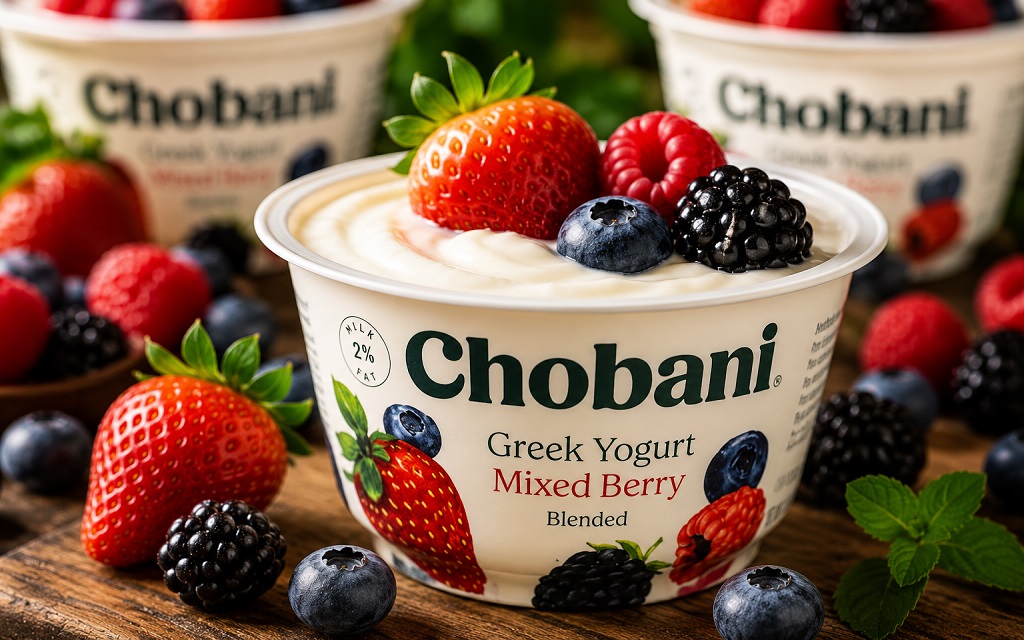
The Chobani lawsuit refers to several legal disputes involving yogurt labeling, advertising practices, ingredient disclosures, and nutrition claims. The most recent case was filed by Danone in 2026 and challenges the protein-content marketing used on Chobani yogurt products. No settlement currently exists, and courts have not determined liability. Earlier lawsuits involving Zero Sugar labeling and natural ingredient claims produced different outcomes, including dismissals and ongoing litigation.
Several consumer lawsuits have also targeted Chobani over “natural” ingredient claims, Zero Sugar labeling, and alleged chemical contamination. Some cases ended in dismissal, while others remain active or continue through court proceedings.
Latest Status
Danone filed a federal lawsuit against Chobani on 15 June 2026. The complaint challenges protein claims used on Chobani 20G Protein yogurt products. Danone argues that serving-size calculations create a misleading impression for consumers.
Current Active Lawsuits
- Danone protein-labeling lawsuit
- Consumer litigation involving alleged chemical contamination
- Certain labeling-related claims under review in federal courts
Settlement Status
No settlement exists in the Danone protein lawsuit. Courts have dismissed some earlier consumer cases. Other matters continue through litigation.
Consumer Impact
Consumers often search for compensation opportunities, product recalls, or class action settlements. Current litigation does not automatically create payment eligibility. Court approval or settlement agreements usually determine consumer rights.
Key Facts
- Multiple lawsuits have involved Chobani.
- The newest case was filed by Danone in 2026.
- The dispute concerns protein-content advertising.
- Earlier cases involved Zero Sugar products and natural ingredient claims.
- No settlement currently exists in the active Danone lawsuit.
- Consumers are not eligible for compensation at this time.
What Is the Chobani Lawsuit?
The term “Chobani lawsuit” does not refer to a single legal case. Several lawsuits have targeted Chobani during the last decade. Most claims involve advertising, ingredient disclosures, nutrition labels, and consumer expectations.
Many consumers first encountered legal disputes involving Greek yogurt marketing. Later lawsuits focused on natural ingredient claims, sugar disclosures, environmental contaminants, and protein-content advertising. Each case presents different allegations and legal theories.
Consumer class actions usually rely on state consumer protection laws. Plaintiffs often argue that labels influenced purchasing decisions. Companies generally deny wrongdoing and defend their marketing practices in court.
Court records show that Chobani has faced litigation from consumers, competitors, and advocacy groups. Some claims resulted in dismissals. Other cases proceeded through discovery and settlement discussions.
Market competition also plays a role. The Greek yogurt industry generates billions of dollars in annual sales across the United States. Statista reports that yogurt remains one of the largest refrigerated dairy categories in North America. Strong competition often leads to disputes over nutrition claims, ingredient disclosures, and product comparisons.
A key point deserves attention. Allegations are not findings of fact. Courts must evaluate evidence before determining liability. You should distinguish between accusations filed in lawsuits and conclusions reached through court orders or settlements.
What Happened in the Danone vs. Chobani Protein Claims Lawsuit?
Danone sued Chobani in June 2026 over advertising claims used on Chobani 20G Protein yogurt products. The lawsuit alleges that consumers receive a misleading impression regarding protein content.
The dispute focuses on protein quantities displayed on product packaging. Danone sells competing yogurt products under the Oikos Pro brand. Chobani markets its competing line as Chobani 20G Protein. Both companies compete directly within the high-protein yogurt segment.
Danone claims that Chobani relies on serving-size calculations that differ from federal standards. According to court filings, Danone argues that consumers compare protein claims across products and expect consistent measurement methods.
Federal nutrition labels follow rules established by the U.S. Food and Drug Administration. FDA regulations include Reference Amounts Customarily Consumed, often called RACC standards. Manufacturers generally use those benchmarks when presenting nutrition information.
Danone argues that Chobani’s packaging creates an unfair marketplace advantage. The company seeks monetary damages and injunctive relief. Injunctive relief typically means a court order that requires changes to marketing or labeling practices.
Chobani has defended its products and labeling practices. No court has ruled that Chobani violated federal law. No judge has determined liability. Litigation remains in its early stages.
Quick Facts
| Item | Details |
|---|---|
| Company | Chobani LLC |
| Main Active Case | Danone v. Chobani |
| Filed | 15 June 2026 |
| Allegation | Misleading protein claims |
| Status | Active Litigation |
| Settlement | None |
| Consumer Compensation | Not Available |
| Court | U.S. District Court for the Southern District of New York |
Industry analysts note that protein-focused dairy products represent one of the fastest-growing yogurt categories. Market research from Circana and dairy industry reports show strong consumer demand for high-protein foods. Competition within that segment has intensified during recent years. Legal disputes often emerge when rival brands challenge advertising claims that influence purchasing decisions.
The outcome could affect future labeling practices across the yogurt industry. A court decision may also influence how competing brands present protein content on product packaging.
Timeline
How Has Chobani’s Legal History Developed Over Time?
Chobani has faced several lawsuits, regulatory disputes, and consumer complaints during the last decade. Most cases involve product labeling, advertising claims, ingredient disclosures, or food safety concerns. A timeline helps readers understand how each dispute fits into the company’s broader legal history.
| Year | Event | Status |
|---|---|---|
| 2013 | Chobani recalled certain yogurt products after reports of mold contamination | Recall completed |
| 2014 | Consumer litigation challenged “natural” labeling claims | Resolved |
| 2018 | Additional consumer-labeling disputes emerged in federal courts | Various outcomes |
| 2022 | Fair Trade and marketing-related claims received attention | Litigation activity |
| 2023-2025 | Chobani Zero Sugar lawsuit challenged sugar-content marketing | Dismissed |
| 2025 | Toxic chemical and phthalate lawsuit filed against Chobani | Pending |
| 2026 | Danone sued Chobani over protein-content claims | Active |
A common theme appears across many lawsuits. Consumers and competitors often challenge product labels that influence purchasing decisions. Courts then evaluate how reasonable buyers interpret packaging statements.
Federal courts have repeatedly stated that context matters. Product labels, ingredient panels, nutrition facts, and advertising materials often become central evidence during litigation. A single phrase on packaging can become the focus of a nationwide lawsuit.
Market data also helps explain why litigation continues. The U.S. yogurt industry generates billions of dollars in annual revenue. Strong competition creates pressure on brands to highlight protein content, sugar levels, ingredient quality, and health benefits. Legal disputes frequently arise when rivals or consumers believe those claims exceed what evidence supports.
Why Is Chobani Being Sued?
Chobani has faced several lawsuits over the years involving product labeling, advertising claims, ingredient disclosures, and food safety concerns. The most recent lawsuit was filed by Danone in 2026 and challenges protein-content claims used on Chobani 20G Protein yogurt products. Danone alleges that Chobani’s labeling may create a misleading impression about protein content compared to competing products.
Many consumers also want to know whether Chobani products have been recalled. The company’s most notable recall occurred in 2013 when certain yogurt products were voluntarily recalled due to mold contamination. That recall was completed, and affected products were removed from the market.
Some consumers search for compensation opportunities after hearing about a lawsuit. At this time, no settlement or consumer compensation program is available in the active Danone lawsuit. Eligibility for compensation typically depends on a court-approved settlement or judgment.
Questions about product safety are also common. Current lawsuits primarily focus on marketing and labeling practices rather than findings that Chobani yogurt products are unsafe to consume. Consumers should review official recall notices and regulatory guidance for the most accurate safety information.
The next steps depend on court proceedings. The Danone lawsuit remains active, and the court will review evidence, legal arguments, and applicable labeling regulations before reaching any decision. No court has determined liability, and the allegations remain unproven.
What Happened in the Chobani Zero Sugar Lawsuit?
The Chobani Zero Sugar lawsuit focused on how consumers interpreted “zero sugar” claims on yogurt products. Plaintiffs argued that packaging and marketing could create confusion about ingredients used to achieve sweetness.
The dispute centered on allulose. Allulose is a low-calorie sweetener that occurs naturally in small amounts in certain foods. Food manufacturers often use it as a sugar alternative because it provides sweetness without the same caloric impact as traditional sugar.
Plaintiffs claimed that consumers could misunderstand the relationship between allulose and sugar-content disclosures. Court filings questioned how reasonable buyers interpret “zero sugar” statements when alternative sweeteners remain present in a product.
Federal regulators have addressed allulose in recent years. The U.S. Food and Drug Administration issued guidance that allows manufacturers to exclude allulose from total sugars and added sugars declarations under certain circumstances. FDA officials reached that position because allulose affects the body differently than traditional sugars.
The court ultimately dismissed the lawsuit. Judges concluded that consumers received sufficient information through product labels and nutrition disclosures. Court records indicate that the labeling complied with applicable regulatory guidance.
The dismissal represented an important outcome for food manufacturers. Companies across the food industry closely monitored the case because many brands use alternative sweeteners in reduced-sugar products.
Consumer interest in low-sugar foods continues to rise. Industry research shows that demand for reduced-sugar products remains strong among health-conscious shoppers. Legal disputes in this area often focus on consumer perception rather than product safety.
Why Did the Toxic Chemical and Phthalate Lawsuit Draw Attention?
A 2025 lawsuit alleged that certain Chobani yogurt products contained phthalates and other synthetic chemicals despite marketing statements that referenced natural ingredients. The complaint attracted attention because consumers often associate “natural” claims with ingredient purity.
Phthalates are chemical compounds used in many industrial and consumer products. Scientists have studied some phthalates because of potential health concerns associated with long-term exposure. Regulatory agencies continue to evaluate scientific evidence regarding exposure levels and health risks.
Plaintiffs argued that laboratory testing detected measurable amounts of certain chemicals in yogurt products marketed with natural ingredient messaging. The lawsuit alleged that consumers paid premium prices because they believed the products aligned with expectations created by advertising and packaging statements.
Chobani disputed the allegations. Company representatives pointed to food safety standards and regulatory requirements that apply to food production and packaging processes. Court filings reflect competing interpretations regarding the significance of detected chemical levels.
A major legal question involves consumer expectations. Courts often examine how ordinary buyers understand phrases such as “only natural ingredients” or similar marketing language. Judges may evaluate product packaging, scientific evidence, regulatory guidance, and expert testimony.
The litigation remains important because natural-labeling lawsuits continue across the food industry. Similar cases have targeted snack foods, beverages, cereals, and dairy products. Consumer advocacy groups frequently monitor those disputes because ingredient transparency remains a major concern among shoppers.
No court has determined liability regarding the allegations. The lawsuit remains an accusation until evidence receives full judicial review.
What Happened During Previous Chobani Recalls and Labeling Disputes?
Several legal and regulatory issues affected Chobani before the recent protein-content lawsuit. The most widely reported event occurred in 2013 when the company recalled certain yogurt products after consumers reported unusual taste, swelling containers, and product spoilage.
Chobani announced a voluntary recall after investigations identified mold contamination linked to a specific strain known as Mucor circinelloides. Company officials stated that affected products represented a limited portion of overall production. Retailers removed impacted items from store shelves, and consumers received refund options.
Food recalls often attract significant public attention because consumer confidence can change quickly. The U.S. Centers for Disease Control and Prevention estimates that millions of Americans experience foodborne illness each year. Food manufacturers, therefore, face intense scrutiny whenever contamination concerns arise.
Chobani also faced disputes regarding product labeling and advertising. Several lawsuits challenged natural-ingredient claims on yogurt packaging. Plaintiffs argued that some ingredients or production methods conflicted with consumer expectations associated with the word “natural.”
Courts across the United States have reviewed many natural-labeling disputes involving food manufacturers. Judges often examine how a reasonable consumer interprets product packaging. Ingredient lists, nutrition facts panels, advertising materials, and scientific evidence frequently become important factors.
Another notable dispute involved Greek yogurt marketing practices. Industry competitors and consumer advocates raised questions regarding labeling standards and product descriptions. Similar disputes have affected multiple yogurt manufacturers because Greek yogurt became one of the fastest-growing dairy categories in the United States.
Most labeling cases did not produce findings that Chobani intentionally misled consumers. Several matters ended through dismissal, settlement discussions, or procedural resolutions. Court outcomes depended on the specific facts and legal arguments presented in each case.
Can Consumers Join a Chobani Lawsuit?
Eligibility depends on the specific lawsuit. A consumer cannot automatically join every case that involves Chobani products.
Class action lawsuits generally require a court-certified class before consumers gain participation rights. Courts must first determine that a group of people experienced similar alleged harm. Judges then evaluate class certification requests before a case proceeds on behalf of a larger group.
The active Danone protein lawsuit differs from a consumer class action. Danone filed that case as a competitor. Consumers are not plaintiffs in the litigation. No public settlement fund currently exists for yogurt purchasers connected to that lawsuit.
Consumer lawsuits follow a different process. A settlement administrator typically publishes notices if a court approves a settlement. Eligible consumers may then submit claims according to court-approved procedures.
You should review several factors before assuming eligibility.
- Product purchased
- Purchase date
- State of residence
- Case status
- Settlement terms
- Court approval requirements
Court websites and settlement administrators usually provide official eligibility information. Attorneys often publish updates after major rulings, certification decisions, or settlement approvals.
Many consumers search for compensation immediately after news reports appear. However, legal headlines rarely create instant eligibility. Most class actions require months or years of litigation before compensation becomes available.
A practical approach involves monitoring official court filings and settlement websites. Reliable information generally appears there before social media reports or third-party commentary.
What Rights Do Consumers Have?
Consumers who believe they were misled by a product’s labeling, advertising, or marketing may have legal rights under federal and state laws. Depending on the circumstances, consumers may be able to pursue claims involving false advertising, deceptive marketing practices, breach of warranty, or violations of state consumer protection statutes.
However, legal rights and potential remedies vary from case to case. Eligibility often depends on several factors, including the specific product purchased, the state where the consumer lives, when the purchase occurred, and how the court ultimately rules on the claims. If a class action settlement is approved, compensation may also depend on the settlement terms established by the court.
It is important to understand that filing a lawsuit does not automatically entitle consumers to compensation. Courts must first evaluate the allegations, evidence, and legal arguments before determining whether consumers are eligible for any recovery. Consumers can typically find official updates through court records, settlement administrators, or court-approved notices.
FAQs
What is the Chobani lawsuit about?
The phrase “Chobani lawsuit” refers to multiple legal disputes involving yogurt labeling, ingredient disclosures, sugar-content claims, natural-ingredient marketing, alleged chemical contamination, and protein-content advertising. Different lawsuits involve different allegations and legal issues.
Has Chobani been found liable in the protein lawsuit?
No. The litigation remains active. No court has ruled that Chobani violated federal law. Allegations remain unproven until judicial review concludes.
What is the Chobani Zero Sugar lawsuit?
The lawsuit challenged marketing statements used on Chobani Zero Sugar products. Plaintiffs questioned how consumers interpret sugar-related claims when products contain allulose. A federal court later dismissed the case.
What is allulose?
Allulose is a low-calorie sweetener that occurs naturally in small amounts in certain foods. FDA guidance permits specific labeling treatment because allulose affects the body differently than traditional sugars.
What are phthalates?
Phthalates are synthetic chemical compounds used in many industrial and consumer applications. A 2025 lawsuit alleged that certain Chobani products contained measurable levels of phthalates despite natural-ingredient marketing claims.
Final Words
The Chobani lawsuit story involves much more than a single court case. Recent attention centers on Danone’s challenge to protein-content advertising, yet earlier litigation addressed natural-ingredient claims, Zero Sugar labeling, alleged chemical contamination, and product safety concerns.
Consumers should separate allegations from facts. Courts have dismissed some claims and allowed others to proceed. No court has determined liability in the 2026 protein lawsuit. Future rulings may influence yogurt-labeling practices across the dairy industry.
A careful review of court filings, FDA guidance, and official settlement notices remains the most reliable way to follow developments. Legal outcomes can change over time, and each lawsuit follows its own path through the court system.

Musarat Bano is a content writer for JudicialOcean.com who covers lawsuits, legal news, and general legal topics. Her work focuses on research-based, informational content developed from publicly available sources and is intended to support public awareness. She does not provide legal advice or professional legal services.