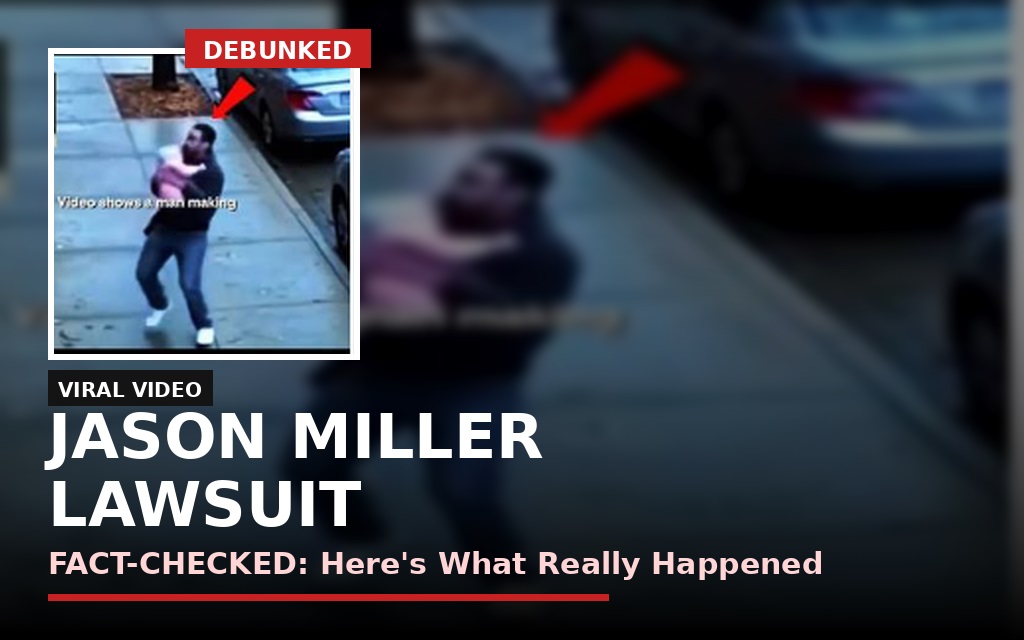
No, “Jason Miller” was not sued for catching a falling baby. This is a fabricated viral story with no supporting court records, no verified news coverage, and AI-generated video evidence. It began circulating on social media in October 2025 and has spread in multiple mutating versions since.
What the Viral Claim Says
Since late 2025, a story has circulated widely across TikTok, Facebook, Instagram, and Threads claiming that a 25-year-old man named Jason Miller caught a toddler falling from a fifth-floor balcony. According to the story, the child survived but suffered fractures during the catch, and the child’s mother then filed a lawsuit against Miller, accusing him of “reckless rescue” and seeking roughly $500,000 in damages.
The narrative is built for emotional impact: a bystander risks his life to save a child, only to be punished for it. That framing, heroism met with ingratitude, is a large part of why the story spread so quickly and continues to resurface.
The claim is typically accompanied by short-form video: dramatic captions, ambulance footage, and a courtroom clip presented as Miller’s hearing.
The Evidence That This Story Is Fabricated
Multiple independent fact-checking investigations examined this claim and found no credible support for it.
- No matching court record exists. Searches of Court Listener, a public court-records database, returned no case matching a “Jason Miller” sued for reckless rescue.
- The courtroom footage is misattributed. The video frame widely shared as Miller’s court appearance was actually taken from unrelated coverage of a Denver cardiologist’s criminal case involving assault allegations, a completely different person, a different case, and a different city.
- No original journalism supports it. Fact-checkers searching outside social platforms found the story traced back to a single article on a barely two-month-old website with no disclosed authors and an empty contact page, published in February 2026, well after the claim was already circulating on social media in October 2025.
- The visuals show signs of AI generation. Independent digital-forensics review of the videos flagged composite imagery and synthetic-voice narration consistent with AI-generated content rather than authentic footage.
Taken together, these findings- a nonexistent court case, a recycled and misattributed image, an unverifiable single-source origin, and an AI-manipulated video- are the standard hallmarks fact-checkers use to identify a fabricated story rather than an underreported real event.
Why the Story Keeps Changing
One notable feature of this hoax is that it doesn’t stay fixed. However, each time fact-checkers debunk one version, a slightly different one resurfaces:
- The settlement amount has varied between roughly $500,000 and $600,000 across different posts.
- The city or location of the alleged incident shifts between retellings.
- Some versions add details not present in earlier ones, such as claims about the rescuer’s arm injuries or hospitalization.
This variability is a common pattern in viral misinformation. A story built around emotion rather than verifiable facts is easy to reskin, which helps it evade fact-checks tied to one specific version and keeps it circulating under new details.
What the Law Actually Says About Rescues Like This
Even setting the fabricated case aside, the underlying legal premise that a good-faith rescuer could be successfully sued for injuries caused during an emergency rescue doesn’t match how these laws typically work.
Good Samaritan laws exist in some form in all 50 U.S. states. In general, they are designed to:
- Protect people who voluntarily give aid in an emergency from civil liability for unintended harm.
- Apply as long as the person acted in good faith and without gross negligence or intentional misconduct.
- Encourage bystanders to help without fear of routine lawsuits over imperfect outcomes.
Under these general legal standards, a person catching a falling child in an emergency, with no time to plan a “technique”, would typically be evaluated under a gross-negligence standard, not held to the standard of a trained rescue professional. That’s a meaningfully higher bar than the “he used the wrong catching technique” framing used in the viral story.
Note: Good Samaritan laws vary by state and country in their exact scope and exceptions. However, this section describes general legal principles, not legal advice for any specific situation. Consult a licensed attorney in your jurisdiction for guidance on an actual case.
Who Is Jason Miller?
“Jason Miller” is a fairly common name. Search interest in this hoax sometimes overlaps with searches for a real public figure by the same name: Jason Miller, an American communications strategist and political adviser. However, he is best known as the chief spokesman for Donald Trump’s 2016 presidential campaign and transition. As a senior adviser to Trump’s 2020 campaign. In 2021, he left that role to become CEO of GETTR. A social media platform, before stepping down in 2023 to rejoin Trump’s team as a senior adviser for the 2024 campaign.
Is This the Real Jason Miller?
Search interest in this story sometimes overlaps with searches for real public figures named Jason Miller, including a political consultant and media executive by that name. These are unrelated. Nothing in this fact-check applies to any real, identifiable person named Jason Miller. However, the “Jason Miller” in the viral baby-rescue story is a fictional character created for a fabricated social media narrative, not a report about any specific real individual.
FAQs
Is the Jason Miller baby lawsuit real?
No. Fact-checkers found no court record, no original news reporting, and evidence that the supporting video is AI-generated.
Did anyone actually get sued for saving a baby?
There’s no verified case matching this description. The courtroom photo used in the story is from an unrelated criminal case in Denver.
Why does the settlement amount keep changing between $500,000 and $600,000?
Different versions of the hoax have circulated with different dollar amounts and locations, a common pattern in viral misinformation that helps stories evade fact-checks tied to one specific version.
What is a Good Samaritan law?
A Good Samaritan law is a statute, present in some form in all 50 U.S. states, that generally protects people who provide emergency assistance in good faith from civil liability, unless they act with gross negligence or intentional misconduct.
Could someone really be successfully sued for how they caught a falling child?
Under the general gross-negligence standard applied in most U.S. jurisdictions, a spontaneous rescue attempt is unlikely to result in liability absent reckless or intentional conduct. Specific outcomes depend on the state and the facts of an actual case.
Where did this story originate?
The claim was circulating on social media by October 2025. The earliest identifiable article outside social platforms appeared in February 2026 on a newly created website with no disclosed authorship.
Sources
- Lead Stories / Yahoo News: fact-check tracing the claim’s origin, Court Listener search, and misattributed courtroom photo
- Boatos.org: early fact-check of the viral claim
- Court Listener: public court records database (searched, no matching case found)

Musarat Bano is a content writer for JudicialOcean.com who covers lawsuits, legal news, and general legal topics. Her work focuses on research-based, informational content developed from publicly available sources and is intended to support public awareness. She does not provide legal advice or professional legal services.