
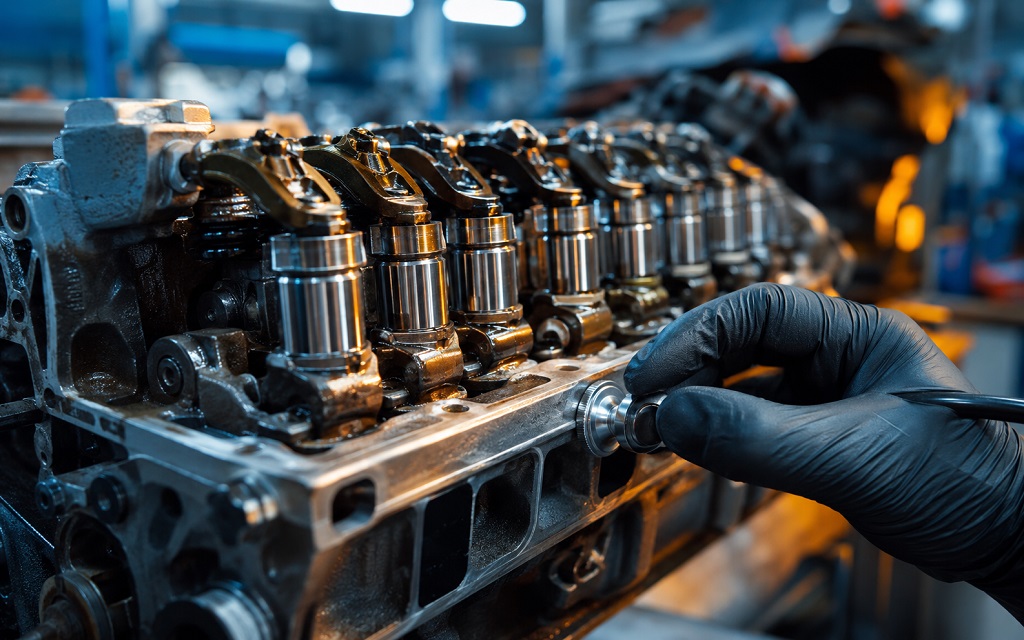
General Motors issued Preliminary Information Bulletin PIP6101A in February 2026. The bulletin covers a top-end engine tick found in three engines: the 2.7-liter L3B, the 2.5-liter LK0, and the 2.0-liter LSY. GM traces the noise to production debris that lodges inside the hydraulic valve lash adjuster and blocks normal oil flow.
A technician must remove the camshaft carrier, check all sixteen adjusters by hand, and replace any soft adjuster along with its matching rocker arm. GM covers the repair under the standard powertrain warranty at no cost to the owner. This is a service bulletin, not a recall, so GM does not mail notices directly to owners.
Quick Facts
| Item | Information |
|---|---|
| Bulletin Number | PIP6101A |
| Manufacturer | General Motors |
| Affected Brands | Chevrolet, GMC, Buick, Cadillac |
| Engine Types | 2.7L L3B, 2.5L LK0, 2.0L LSY |
| Model Years | 2025–2026 |
| Reported Issue | Top-end engine tick from the valvetrain |
| Root Cause | Production debris blocking hydraulic lash adjuster oil pressure |
| Diagnostic Method | Stethoscope inspection and manual adjuster firmness check |
| Recommended Repair | Replace all 16 hydraulic lash adjusters and 16 rocker arms |
| Part Number | 12663277 (hydraulic valve lash adjuster) |
| Warranty Status | Fully covered under standard powertrain warranty |
| Recall Status | Not a recall — dealer service bulletin only |
What PIP6101A Actually Is
A Preliminary Information bulletin is not a recall. GM sends it to dealer service departments, not to owners’ mailboxes. A dealer uses it as a diagnostic script: it tells the technician what to check, how to check it, and what parts to order once a problem is confirmed. NHTSA still logs these bulletins in its public database, so any owner can search the bulletin number and read the full document.
The “A” in PIP6101A marks a revision. GM first published PIP6101 in February 2026 and limited it to the 2.7L L3B and 2.5L LK0 engines, as Yahoo Autos reported at the time. GM expanded the bulletin to PIP6101A the following month and added the 2.0L LSY engine, along with several Cadillac and Buick models that use it, according to Autoblog’s coverage of the update. An owner who checked the original bulletin and found their vehicle absent should check again, since the revised version widens the affected list.
Which Vehicles Does PIP6101A Cover?
The table below lists every brand, model, and engine named in the current bulletin.
| Brand | Model | Engine | Model Years |
|---|---|---|---|
| Chevrolet | Silverado 1500 | 2.7L L3B | 2025–2026 |
| Chevrolet | Colorado | 2.7L L3B | 2025–2026 |
| Chevrolet | Traverse | 2.5L LK0 | 2025–2026 |
| Chevrolet | Blazer | 2.0L LSY | 2025–2026 |
| GMC | Sierra 1500 | 2.7L L3B | 2025–2026 |
| GMC | Canyon | 2.7L L3B | 2025–2026 |
| GMC | Acadia | 2.5L LK0 | 2025–2026 |
| Buick | Enclave | 2.5L LK0 | 2025–2026 |
| Buick | Envision | 2.0L LSY | 2025–2026 |
| Cadillac | CT4 | 2.0L LSY | 2025–2026 |
| Cadillac | CT5 | 2.0L LSY | 2025–2026 |
| Cadillac | XT4, XT5, XT6 | 2.0L LSY / 2.5L LK0 | 2025–2026 |
GM builds all three engines at the Spring Hill, Tennessee plant. A shared production line is the likely reason a single quality issue reached three separate engine families at once. The Buick Envision comes from a plant in China, but it still receives the Spring Hill-built LSY engine, which places it inside the same bulletin.
GM did not publish a specific VIN range for this bulletin. An owner cannot look up a build date and rule the issue out with certainty. The only reliable check is a listen: start the engine cold, let it idle, and note any steady metallic tick from the top of the engine.
The Root Cause, in Plain Terms
Every four-cylinder engine on this list uses a hydraulic valve lash adjuster to keep valve clearance correct without a manual adjustment. Oil pressure fills the adjuster and holds it firm against the rocker arm. A firm adjuster runs silently.
Small metal shavings left over from the production process can work their way inside the adjuster. Once debris blocks the internal oil passage, the adjuster cannot build proper pressure and turns “soft.” A soft adjuster allows a small gap to open and close with every valve cycle, and that gap produces the tick a driver hears at idle or low RPM. The bulletin text itself describes the mechanism as rocker-arm debris that keeps the adjuster from pumping up with oil.
GM states the noise itself does not point to a design flaw in the L3B, LK0, or LSY engines. The three engines carry a strong reputation for output and efficiency, and GM frames this bulletin as a production-quality issue tied to a specific batch of components rather than an engineering defect.
How a Dealer Diagnoses and Repairs the Tick
The bulletin lays out a fixed sequence. A shop that skips a step risks a comeback repair, so an owner should expect the full process below rather than a quick fix.
- Confirm the source. A technician uses a stethoscope or a similar tool to verify the tick comes from the valvetrain and not from another part of the engine, such as an exhaust leak or accessory belt.
- Remove the camshaft carrier. This step exposes the rocker arms and the sixteen hydraulic valve lash adjusters underneath.
- Check every adjuster by hand. The technician presses down on each rocker arm at the point where it rests on the adjuster, on both the intake and exhaust side, and notes any adjuster that feels soft.
- Replace as a set. If even one adjuster tests soft, GM directs the shop to replace all sixteen adjusters and all sixteen rocker arms together, rather than swap the single failed part.
This full-set replacement rule matters for cost estimates. A shop cannot quote a repair for “one bad lifter.” The bulletin treats a single soft adjuster as a sign the whole batch may share the same defect, so the fix always covers the full valvetrain.
Warranty Coverage and Out-of-Pocket Cost
GM covers this repair under the standard new-vehicle powertrain warranty, which runs five years or 60,000 miles on most GM models, whichever comes first. An owner inside that window pays nothing for parts or labor tied to this bulletin, a point Autoblog confirmed directly with GM.
An owner outside the powertrain warranty faces a different math. GM lists the hydraulic valve lash adjuster (part number 12663277) at under five dollars per unit through a dealer parts counter, which puts sixteen adjusters near seventy to eighty dollars in parts alone. Rocker arm pricing and labor time push the total repair well past that figure once a shop factors in the camshaft carrier removal and reassembly, which is a multi-hour job rather than a quick swap. An owner should request a written estimate before authorizing the repair, since labor rates vary widely by region and dealer.
Parts availability has also lagged demand. As of early March 2026, dealers reported a seven-to-ten-day backorder on the adjuster part number, tied directly to the volume of bulletin-related repair orders across the affected model lineup.
Owner Rights and Legal Context
The information below explains general consumer-protection concepts tied to vehicle warranties. It is not legal advice for any individual situation. An owner with a dispute over warranty coverage should speak with a licensed attorney in their state.
A GM powertrain warranty is a written warranty, and the Magnuson-Moss Warranty Act, a federal law, sets baseline rules for how manufacturers must honor written warranties on consumer products sold in the United States. Under this framework, a dealer generally cannot deny a covered repair once a documented defect exists and falls within the warranty term.
State lemon laws sit alongside this federal law and vary by state. Most versions apply once a vehicle needs repeated repair attempts for the same defect within a set mileage or time window, or once the vehicle sits out of service for a cumulative number of days. A single tick-related repair, once resolved through the PIP6101A process, will rarely meet a lemon law threshold on its own. A pattern of repeat visits for the same noise, or a dealer’s refusal to perform the documented fix, changes that picture and gives an owner stronger footing.
An owner who wants to protect their position should keep three things on file: every repair order tied to the noise, the date each visit occurred, and any written communication with the dealer or with GM customer service. A documented paper trail is the single most useful asset if a warranty dispute later requires a complaint to a state attorney general, a manufacturer arbitration program, or an attorney.
An owner can also file a complaint directly with NHTSA at nhtsa.gov if a dealer denies a bulletin-covered repair. As well as if the owner believes the noise points to a safety concern beyond what the bulletin describes. NHTSA complaints do not resolve individual disputes, but a pattern of complaints can prompt a formal investigation, which is the process that sometimes precedes a full recall.
PIP6101A and the Separate 6.2L V8 Issue
Some coverage of this bulletin links to a different GM story: an NHTSA investigation into engine damage on the 6.2-liter V8. The two issues are unrelated. The V8 investigation involves a different engine family, a different failure mode tied to a prior recall remedy, and a formal NHTSA defect investigation rather than a dealer service bulletin. An owner of a four-cylinder L3B, LK0, or LSY vehicle does not need to track the V8 story, and an owner of a V8 truck does not fall under PIP6101A.
What an Owner Should Do Right Now
- Listen for the tick at cold idle. The noise is usually most obvious in the first minute after startup, before the engine fully warms.
- Avoid sustained high RPM until a dealer confirms the source of any noise. GM’s own guidance flags this as a precaution while a diagnosis is pending.
- Schedule a dealer visit and reference PIP6101A by number when booking the appointment, so the service advisor pulls the correct bulletin instead of treating the noise as a generic complaint.
- Request the repair order in writing, including the VIN, mileage, and every step performed, even when the repair costs nothing under warranty.
- Ask about the part backorder status before the appointment, since a shop may need to schedule a return visit if the adjusters are not in stock.
FAQs
Does PIP6101A cover the GM engine tick dangerous to drive with?
GM’s bulletin does not identify a safety risk tied to the noise itself. Left unaddressed, a soft adjuster can lead to added valvetrain wear over time. So prompt repair is the safer path, even without immediate danger.
Will PIP6101A turn into a full recall?
GM has issued this as a service bulletin, not a recall, and nothing in the current document points toward a recall. A recall becomes more likely only if NHTSA opens a formal investigation, which would follow a pattern of safety-related complaints rather than a noise complaint alone.
How do I know if my specific vehicle is affected?
GM did not publish a VIN range for this bulletin. The most reliable check is the vehicle itself: a steady metallic tick at cold idle from an engine on the model list above warrants a dealer inspection referencing PIP6101A.
How long does the repair take?
The job involves camshaft carrier removal and a full inspection of sixteen adjusters. So an owner should expect a multi-hour appointment rather than a same-morning fix. Also, should confirm a loaner or shuttle option when booking.
Does a PIP6101A repair affect resale value?
A warranty repair tied to a manufacturer bulletin, documented and completed under warranty, does not typically appear on a vehicle history report in a way that affects resale value. A buyer’s more relevant question is whether the noise has returned after the fix, which a pre-purchase cold-start inspection can confirm.

Musarat Bano is a content writer for JudicialOcean.com who covers lawsuits, legal news, and general legal topics. Her work focuses on research-based, informational content developed from publicly available sources and is intended to support public awareness. She does not provide legal advice or professional legal services.