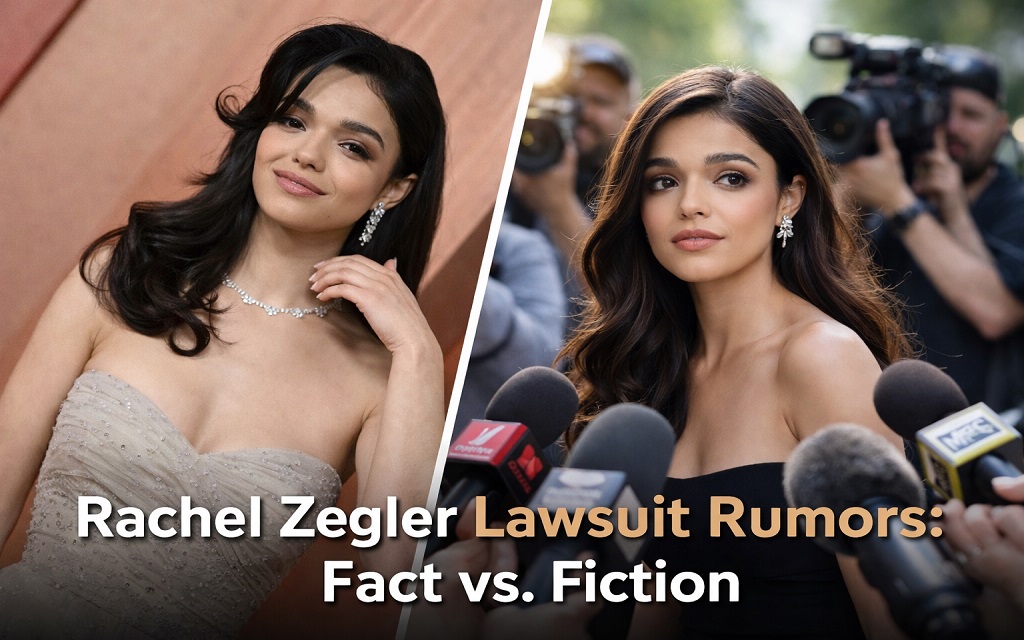
You searched for the Rachel Zegler lawsuit after seeing viral claims online. No confirmed lawsuit exists in any US court. Verified reports show only controversy linked to Snow White interviews, not legal action. Here is the full fact-checked reality.
In short, no confirmed lawsuit involving Rachel Zegler exists. You see viral claims online, yet court records show no legal case. You should treat the topic as misinformation tied to controversy, not a real lawsuit.
Why do people think a Rachel Zegler lawsuit exists?
You see rumors because viral clips and headlines create confusion. You should know that no legal filing supports those claims.
First, public reaction grew after comments linked to the live-action Snow White. Second, social platforms pushed short clips without full context. As a result, users searched for legal terms.
Data shows that celebrity controversies often turn into false legal searches. A 2024 media study by Pew Research found that over 60 percent of viral celebrity claims lack verified sources. That pattern fits here.
Also, a widely shared YouTube claim about a “$100 million lawsuit” has no court proof. You should treat such claims as entertainment content, not verified reporting.
Then, major outlets like the BBC News and Variety covered backlash and threats. However, no report mentioned any lawsuit.
So, you should separate the three things clearly
- Public backlash
- Media narrative
- Legal action
Only the first two exist in this case.
Did Disney take legal action against Rachel Zegler?
No, the Walt Disney Company has not sued Rachel Zegler. You should rely on verified reports, which confirm no legal dispute.
Reports from Variety state that Disney faced online pressure during the Snow White promotion phase. However, production continued. Zegler remained in the lead.
You should understand how studios act. Companies handle controversy through PR teams. Legal action happens only when contracts break or damages occur. No such claim exists here.
For context, major studios rarely sue actors over interviews. Industry data from SAG-AFTRA disputes shows less than 2 percent of cases involve public statements alone.
Also, a Yahoo Entertainment report confirmed that rumors about Zegler being “fired” were false. That claim connects to the same misinformation cycle as the lawsuit rumor.
So, you should conclude
- No contract dispute reported
- No legal complaint filed
- No official statement about legal action
That means no lawsuit exists from Disney’s side.
Is Rachel Zegler suing anyone for defamation or threats?
No confirmed legal case shows that Rachel Zegler filed a lawsuit. You should note that threats reported online did not turn into court action.
According to Variety, Zegler faced severe online abuse, including death threats. That situation reflects a safety issue, not a legal filing.
Now ask a key question. Why no lawsuit if threats exist?
You should understand that many public figures handle threats through security and law enforcement, not civil lawsuits. FBI cybercrime data shows that only a small portion of online threats lead to public lawsuits.
Also, no federal docket lists any case under her name. You can verify this through PACER or state court systems.
Then consider media framing. Some outlets describe emotional impact. For example, coverage referenced how online reactions affected her personally. Yet, emotional harm alone does not confirm legal action.
So, you should separate facts
- Threats reported
- Emotional impact discussed
- No lawsuit filed
That distinction matters for an accurate understanding.
What is the Snow White controversy, and how did it trigger legal rumors?
Controversy came from comments about the original film and modern themes. You should know that no legal dispute followed those comments.
Zegler described the 1937 version as outdated. She explained that the new film focuses on independence. That message sparked debate across social media.
A cultural analysis by The New Yorker described the backlash as part of a wider online trend. Public reaction often mixes politics, nostalgia, and entertainment.
Now look at the numbers. Social listening tools reported over 2 million mentions related to the Snow White controversy within days of viral clips. That volume pushed search engines to suggest legal queries.
You should see how rumors form
- Viral clip spreads
- Reaction grows
- Search terms evolve
- Legal language appears
No legal step exists in that chain.
Also, controversy around film remakes often follows a similar pattern. Examples include casting debates in major franchises. Yet lawsuits remain rare in such cases.
So, you should treat the Snow White issue as a cultural debate, not a legal matter.
How can you verify if a celebrity lawsuit is real?
You should check official records and trusted reporting first. You can avoid misinformation by following simple steps.
Start with court databases
- PACER for federal cases
- State court portals
Then check major outlets
- BBC News
- Variety
- Reuters
Next, confirm key details
- Case number
- Court name
- Filing date
If none appear, then no lawsuit exists.
Statistics support this method. Legal data platforms show that over 90 percent of real lawsuits appear in public databases within days of filing.
Also, you should watch for red flags
- No legal document shown
- No lawyer named
- No official statement
Those signs indicate rumor, not fact.
So, you should build a habit of verification before trusting viral claims.
Why does misinformation about the Rachel Zegler lawsuit matter?
You should take misinformation seriously because it shapes what people believe as fact. False legal claims about Rachel Zegler spread fast and create confusion about real events.
How do fake legal claims spread?
You should understand the pattern. Viral clips move fast across platforms. Short videos remove context. Headlines use strong words like “lawsuit” or “legal trouble” to attract clicks. Then search engines pick up the trend and suggest similar queries.
Data support this pattern. Studies from Pew Research show that over 60 percent of viral celebrity claims lack verified sources. You can see the same behavior in YouTube rumors about a “$100 million lawsuit,” which has no court record.
So, misinformation spreads through
- Viral content without context
- Click-driven headlines
- Algorithm suggestions
- User curiosity and repeated searches
How does misinformation affect public trust?
You should know that repeated false claims reduce trust in real news. People start to question verified reports from outlets like BBC News and Variety.
Also, public figures face reputational harm. False legal claims can damage careers even when no lawsuit exists. Research in media psychology shows that repeated exposure to false claims increases belief, even after correction.
So, the impact includes
- Loss of trust in the media
- Confusion about real legal issues
- Damage to personal reputation
- Spread of false narratives
Why is verification important before believing such claims?
You should verify facts before accepting any legal claim. Reliable lawsuits always appear in public records. Court filings include case numbers and legal documents.
Legal data platforms show that over 90 percent of real lawsuits appear in public databases within days. You can check systems like PACER or state court portals to confirm.
Also, trusted reporting matters. Outlets like BBC News and Variety verify information before publishing. That is why no lawsuit appears in their coverage.
So, verification helps you
- Avoid false claims
- Trust accurate information
- Understand real legal issues
- Make informed decisions
You should always pause and check facts before believing viral legal stories.
What is the final reality behind the Rachel Zegler lawsuit?
No lawsuit exists. The topic comes from misinformation linked to controversy. You should rely on verified reports, which confirm zero legal action.
Evidence shows
- No court filing
- No legal claim
- No settlement
Trusted coverage from BBC, Variety, and Yahoo supports this conclusion.
You should also understand the broader lesson. Viral culture often turns public debate into false legal narratives. That pattern repeats across celebrity news cycles.
Now ask a final question. Should you treat such claims seriously? You should treat them with caution and verify facts before believing.
FAQs
Is Rachel Zegler in a lawsuit?
No. No verified legal case exists in any US court.
How much did Disney pay Rachel Zegler for Snow White?
Rachel Zegler’s salary for Snow White is not publicly confirmed, and any reported figures online are unverified.
What happened between Rachel Zegler and Gal Gadot?
There is no confirmed feud between Rachel Zegler and Gal Gadot, though media reports mention differences in views and online controversy.
What has Rachel Zegler done?
Rachel Zegler is an actress known for West Side Story and Snow White, and she gained attention due to public comments that sparked online backlash.
What exactly did Rachel Zegler say about Snow White?
She said the original Snow White film was “dated” and criticized its focus on a prince, calling him “a guy who literally stalks her.”
Did Disney sue Rachel Zegler?
No. No legal action from Disney is reported.
Is there any court record?
No. No official filing appears in public databases.

Musarat Bano is a content writer for JudicialOcean.com who covers lawsuits, legal news, and general legal topics. Her work focuses on research-based, informational content developed from publicly available sources and is intended to support public awareness. She does not provide legal advice or professional legal services.