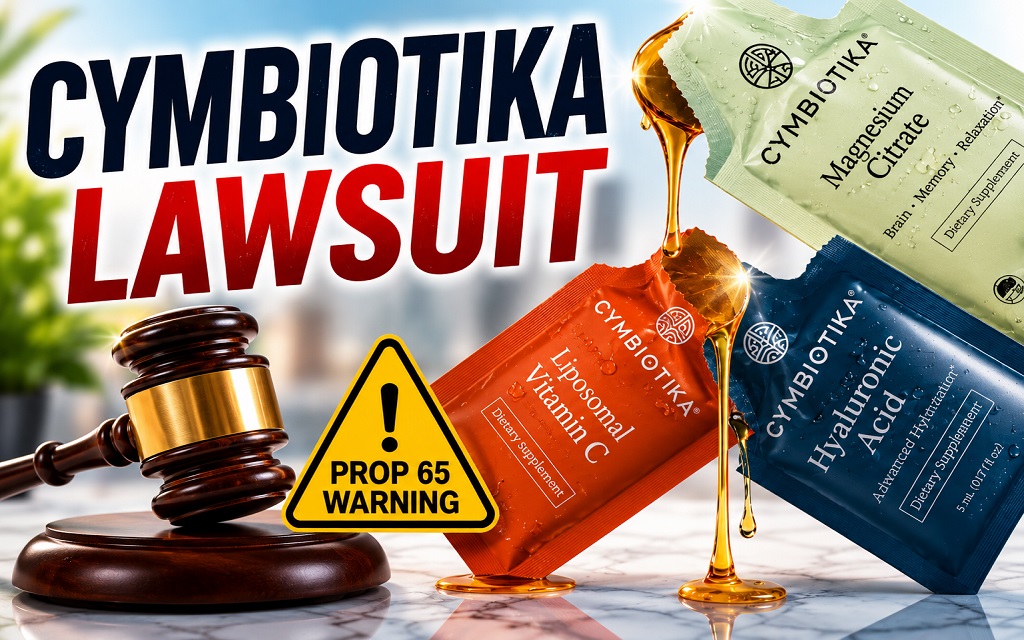
The Cymbiotika lawsuit refers to multiple legal matters involving Cymbiotika, including a California Proposition 65 case concerning alleged lead exposure from certain dietary supplements and a separate business dispute involving Virun, Inc.. Publicly available records show that Cymbiotika settled the Proposition 65 claims through a compliance-focused agreement. However, public court records do not currently show a consumer class action settlement that provides compensation to consumers.
This article explains the Cymbiotika lawsuit, the Proposition 65 settlement, the Virun litigation, and what consumers should know about supplement safety and regulatory compliance.
Key Takeaways
- Public records show that Cymbiotika resolved a California Proposition 65 case related to alleged lead exposure from certain products.
- The Proposition 65 matter focused on warning requirements and compliance obligations rather than a product recall.
- Court filings show that Virun, Inc. pursued legal claims against Cymbiotika in a separate business dispute that involved trade secret allegations.
- Publicly available records do not show a consumer class action settlement that offers compensation to consumers at this time.
- Consumers should review product labels, safety disclosures, testing information, and regulatory updates before they purchase dietary supplements.
What Is the Cymbiotika Lawsuit?
The term “Cymbiotika lawsuit” refers to multiple legal matters rather than a single case. The most notable involves a California Proposition 65 claim alleging that certain Cymbiotika supplements exposed consumers to lead without the warnings required under state law. That case was later resolved through a settlement.
A separate lawsuit between Virun, Inc. and Cymbiotika involved trade secret and business-related allegations, not consumer safety concerns.
| Topic | Details |
|---|---|
| Main Legal Issue | California Proposition 65 allegations |
| Key Concern | Alleged lead exposure warnings |
| Settlement Status | Resolved through settlement |
| Consumer Compensation | No public compensation fund identified |
| Product Recall | No nationwide recall reported |
| Separate Litigation | Virun, Inc. trade secret dispute |
Consumers searching for terms such as Cymbiotika settlement, Cymbiotika lead lawsuit, or Cymbiotika class action lawsuit should understand that these legal matters involve different claims, parties, and outcomes.
Who Filed the Lawsuit Against Cymbiotika?
The most widely discussed Cymbiotika legal matter arose under California Proposition 65, formally known as the Safe Drinking Water and Toxic Enforcement Act of 1986. Proposition 65 lawsuits are commonly brought by private enforcers, consumer advocacy organizations, or public prosecutors who allege that a business failed to provide legally required warnings about exposure to listed chemicals.
The allegations against Cymbiotika focused on whether certain dietary supplements exposed consumers to lead at levels that required Proposition 65 warning labels under California law. The dispute centered on disclosure requirements rather than allegations of widespread consumer injury.
Which Cymbiotika Products Were Involved?
Consumers frequently search for information about which Cymbiotika supplements were identified in the Proposition 65 litigation. Public settlement records should always be reviewed directly for the most accurate product information. The lawsuit focused on products allegedly associated with lead exposure concerns under California warning requirements.
Rather than treating all Cymbiotika supplements as affected, consumers should review current product labels, updated compliance disclosures, and any available testing information provided by the manufacturer.
Why Is Cymbiotika Facing Legal Scrutiny?
Cymbiotika has faced scrutiny because of allegations tied to product safety disclosures and business litigation. Regulatory compliance plays a major role in the dietary supplement industry. Companies must meet labeling requirements, safety standards, and consumer protection rules that apply to their products.
The Proposition 65 case attracted significant attention because it involved alleged lead exposure. California law requires businesses to provide warnings when products expose consumers to certain chemicals above established thresholds. Plaintiffs alleged that some Cymbiotika products required warnings under those rules.
Separate scrutiny emerged from the Virun litigation. That dispute involved allegations related to confidential business information and trade secrets. The claims did not focus on product contamination, consumer injuries, or supplement safety.
Legal scrutiny does not automatically establish liability or wrongdoing. Courts examine evidence, legal arguments, and regulatory standards before they reach conclusions. Consumers should rely on court records, settlement documents, and official regulatory sources when they evaluate legal claims involving supplement companies.
Proposition 65 Allegations
The California Proposition 65 case is one of the most discussed legal matters involving Cymbiotika. The lawsuit alleged that certain supplements exposed consumers to lead without the warnings required under California Proposition 65.
The claims focused on warning requirements rather than consumer injuries. Plaintiffs alleged that some products contained lead at levels that required Proposition 65 warnings before purchase or use. The case was later resolved through a settlement that established compliance and warning obligations.
Lead Exposure Claims
Lead exposure formed the central issue in the Proposition 65 matter. Lead is a naturally occurring heavy metal that can appear in soil, water, and plant-based ingredients. Small amounts may enter dietary supplements through raw materials used during production.
California law establishes specific exposure thresholds that determine when a warning becomes necessary. A company may face legal action if a product exceeds those limits and lacks the required warning language.
Plaintiffs alleged that certain Cymbiotika products exposed consumers to lead above California’s warning thresholds. The lawsuit focused on warning requirements rather than allegations of widespread consumer harm.
Consumers often encounter confusion when they read reports about lead-related lawsuits. The presence of lead in a product does not automatically mean the product presents an immediate health danger. Regulatory agencies evaluate exposure levels, frequency of use, and overall risk before they determine whether legal action or corrective measures are appropriate.
The case highlighted broader concerns about heavy metals in dietary supplements. Similar claims have appeared against supplement manufacturers, food producers, and wellness brands across California under Proposition 65.
Product Warning Requirements
Proposition 65 requires businesses to warn consumers when products may expose them to certain chemicals above California’s established limits. These warnings apply to many products, including dietary supplements, foods, cosmetics, and household goods.
A Proposition 65 warning does not mean a product is unsafe or violates federal law. It is intended to inform consumers about potential chemical exposure. In the Cymbiotika lawsuit, the dispute focused on whether certain products required lead warnings under California law. The settlement later established compliance and disclosure requirements for future sales.
Cymbiotika Proposition 65 Settlement Explained
The Proposition 65 dispute did not proceed to a final court judgment after trial. Instead, the parties reached a settlement agreement that resolved the claims.
Settlement agreements are common in Proposition 65 litigation. Companies often choose settlement because it provides certainty, reduces litigation costs, and establishes clear compliance standards for future operations.
The Cymbiotika settlement addressed the allegations related to lead exposure and warning requirements. The agreement included compliance obligations, financial payments, and provisions that governed future product sales covered by the settlement.
The settlement did not serve as a finding that Cymbiotika admitted wrongdoing. Settlement agreements often contain language that allows parties to resolve disputes without admissions of liability.
Consumers who search for information about the Cymbiotika settlement should understand that the agreement primarily addressed regulatory compliance issues. Public records do not indicate that the settlement created a consumer compensation fund similar to those found in many class action lawsuits.
Is There a Cymbiotika Settlement Payout?
Many consumers searching for the Cymbiotika lawsuit want to know whether a settlement payout is available.
Current public records do not indicate the existence of a court-approved consumer compensation fund related to the Proposition 65 settlement. Unlike many consumer fraud or product liability class actions, Proposition 65 settlements often focus on compliance measures, warning requirements, reformulation obligations, attorney fees, and regulatory enforcement rather than direct payments to consumers.
As of this writing, no publicly available records show a Cymbiotika settlement payout program for consumers.
Settlement Terms
The settlement established obligations related to Proposition 65 compliance. Public records indicate that the agreement covered specified products and addressed future warning requirements and exposure limits.
The parties agreed to resolve the allegations without further litigation. The settlement also included provisions that addressed attorney fees, costs, and other expenses associated with the case.
Many Proposition 65 settlements require companies to reformulate products, provide warnings, conduct testing, or implement compliance procedures. These agreements seek to reduce future disputes and ensure adherence to California regulations.
The Cymbiotika settlement followed that general framework. The agreement focused on compliance measures rather than consumer restitution or product recalls.
Compliance Requirements
The settlement imposed compliance obligations designed to address the concerns raised in the lawsuit. These obligations typically require companies to monitor product formulations, review testing data, and maintain procedures that support regulatory compliance.
Companies subject to Proposition 65 settlements often conduct routine laboratory analysis and maintain records that demonstrate adherence to agreed standards. These measures help reduce future legal exposure and support consumer transparency.
Compliance provisions also create accountability mechanisms. Companies must follow specific requirements outlined in settlement documents or face potential enforcement actions if violations occur.
The Cymbiotika settlement reflects a broader pattern seen across the dietary supplement industry. Manufacturers frequently adopt enhanced compliance protocols after regulatory disputes to reduce risk and strengthen consumer confidence.
Financial Payments
The settlement included financial payments that resolved the Proposition 65 claims. These payments covered legal expenses, attorney fees, costs, and other obligations identified in the settlement agreement.
Consumers often assume that all lawsuit settlements create compensation opportunities. Proposition 65 settlements operate differently in many cases. Financial payments frequently support legal resolution and regulatory enforcement rather than direct consumer recovery.
Public records related to the Cymbiotika matter do not show the creation of a consumer claims process. Available documents indicate that the financial aspects of the settlement focused on resolving the legal dispute and supporting compliance measures established under the agreement.
The settlement closed an important chapter in the Proposition 65 litigation. However, public interest remains strong because consumers continue to seek information about supplement safety, heavy metal testing, and product transparency.
Virun v. Cymbiotika Lawsuit
The Virun v. Cymbiotika lawsuit differs significantly from the Proposition 65 case. This litigation did not focus on consumer safety, lead exposure, product quality, or supplement labeling. Instead, the dispute involved business-related claims between two companies that operated in the health and wellness sector.
Court records show that Virun, Inc. filed legal claims against Cymbiotika in federal court. The case attracted attention because it involved allegations related to proprietary business information and intellectual property. These claims fell into a different legal category than consumer protection or regulatory enforcement actions.
Consumers who search for the Cymbiotika lawsuit often encounter references to the Virun case. Many articles fail to explain that the litigation involved commercial disputes rather than allegations of consumer harm. This distinction remains important because the legal issues, evidence, and potential outcomes differ substantially from cases that involve product safety concerns.
The dispute became part of the broader legal history associated with Cymbiotika. However, public records show that the allegations centered on business conduct and competitive interests rather than dietary supplement safety.
Background
Virun, Inc. operates in the nutritional and wellness industry. The company became involved in litigation with Cymbiotika after disputes arose regarding business relationships and proprietary information.
Court filings indicate that the parties had prior interactions connected to commercial activities. Legal disagreements later emerged, which prompted formal litigation. The case moved into federal court, where both sides presented claims and defenses through the judicial process.
Business disputes of this type often involve confidential information, contractual obligations, product development, supplier relationships, or competitive practices. Court proceedings allow each side to present evidence and challenge allegations before a judge or jury reaches a final determination.
The available court documents show that the litigation developed through multiple procedural stages. The parties submitted motions, legal arguments, and supporting materials as the case progressed.
Trade Secret Allegations
Trade secret allegations formed a central part of the dispute. A trade secret can include confidential business information that provides economic value because competitors do not possess it. Examples may include formulas, manufacturing processes, research data, supplier information, customer information, or proprietary methods.
Virun alleged that protected information became involved in conduct that violated trade secret laws. The company pursued claims that sought legal remedies under applicable federal and state statutes.
Trade secret litigation often carries significant financial and operational consequences because companies rely on confidential information to maintain competitive advantages. Courts examine whether the information qualifies for legal protection and whether improper acquisition, disclosure, or use occurred.
The allegations remained allegations unless proven in court. Legal filings present claims made by parties to a dispute. Courts evaluate evidence before they determine liability or award damages.
The Virun litigation illustrates how intellectual property disputes can become complex and highly contested. Such cases often involve extensive document review, expert analysis, and procedural motions before resolution occurs.
Court Proceedings
Court records show that the Virun v. Cymbiotika lawsuit progressed through multiple stages of litigation, including discovery, motions, and other procedural proceedings. The parties filed numerous legal arguments and supporting documents as the case moved through the court.
Importantly, the dispute involved business and trade secret allegations rather than claims that Cymbiotika supplements harmed consumers. It was separate from the Proposition 65 lawsuit and involved different facts, legal issues, and parties.
Has Cymbiotika Faced a Class Action Lawsuit?
Many consumers search for a Cymbiotika class action lawsuit, but current public records do not show a court-approved consumer class action settlement or compensation fund. Some online reports combine the Proposition 65 case, consumer concerns, and unrelated litigation, which can create confusion.
The Proposition 65 settlement primarily addressed warning requirements and compliance obligations rather than consumer compensation. Consumers should rely on official court records and settlement documents for the most accurate information about lawsuit status and potential claims.
Are Cymbiotika Products Safe?
Many consumers wonder whether Cymbiotika products are safe after reading about the lawsuit and alleged lead exposure claims. The Proposition 65 case focused on warning requirements, not allegations of widespread consumer injuries, and public records do not indicate a nationwide product recall.
As with any dietary supplement, safety depends on factors such as ingredient quality, manufacturing practices, testing standards, and regulatory compliance. Consumers should review product labels, testing information, and official disclosures before making a purchase.
Heavy Metal Concerns
Heavy metal concerns often appear in discussions about dietary supplements. Lead, arsenic, cadmium, and mercury receive the most attention because excessive exposure can create health risks over time.
Natural ingredients may contain trace amounts of heavy metals due to environmental conditions. Soil composition, water quality, agricultural practices, and raw material sourcing can all influence exposure levels. These issues affect many sectors of the food and supplement industry.
The Cymbiotika Proposition 65 case focused specifically on alleged lead exposure from certain products. The legal dispute centered on California warning requirements rather than allegations that consumers suffered widespread health injuries.
Consumers should understand an important distinction. The detection of a heavy metal does not automatically establish a dangerous product. Risk assessments consider exposure levels, serving size, frequency of use, and applicable regulatory thresholds.
Heavy metal testing remains a key part of quality assurance programs across the supplement industry. Companies often rely on laboratory analysis to evaluate ingredient purity and support compliance efforts.
Testing Standards
Testing standards play a critical role in supplement safety and quality control. Manufacturers use laboratory testing to verify ingredient identity, evaluate purity, and detect contaminants such as heavy metals, microbes, or unwanted substances.
Independent laboratory analysis provides an additional layer of verification. Third-party testing can help confirm whether products meet established specifications and regulatory requirements. Many consumers consider third-party verification an important factor when evaluating supplement brands.
Testing protocols may vary between companies. Some manufacturers publish certificates of analysis or quality reports. Others provide limited public information about testing procedures. Consumers should examine available disclosures before they make purchasing decisions.
Regulatory agencies, consumer advocates, and industry groups continue to emphasize transparency in testing and quality assurance. Clear testing standards help strengthen consumer confidence and reduce uncertainty regarding product composition.
The broader supplement industry has faced repeated scrutiny regarding ingredient accuracy and contaminant testing. Therefore, robust quality control systems remain an important component of responsible manufacturing practices.
Consumer Considerations
Consumers should evaluate supplement products carefully before purchase. Product labels, ingredient transparency, dosage information, and safety disclosures can provide useful insights into product quality.
Consumers should also consider personal health circumstances. Existing medical conditions, prescription medications, allergies, and dietary restrictions may influence whether a supplement is appropriate. Healthcare professionals can provide guidance based on individual needs and medical history.
Research remains an important part of the decision-making process. Consumers should review credible sources, regulatory records, scientific literature, and verified company disclosures. Reliable information often provides a more accurate picture than online speculation.
Consumers who remain concerned about heavy metals or product safety can contact manufacturers and request additional information regarding testing procedures and quality controls. Transparency often helps consumers make informed decisions.
Timeline of Legal Events
| Year | Event |
|---|---|
| 2022 | Proposition 65 lawsuit filed |
| 2022 | Virun litigation initiated |
| 2023 | Proposition 65 settlement reached |
| 2023-2025 | Virun litigation activity continues |
| 2026 | No public consumer settlement identified |
What Consumers Should Do
Consumers should review facts before concluding any lawsuit involving a supplement company. Public court records, regulatory documents, and settlement agreements often provide more reliable information than headlines or social media discussions.
Consumers should examine product labels and safety disclosures before purchase. Ingredient transparency and quality assurance information can help support informed decisions.
Consumers should consult healthcare professionals when questions arise regarding supplement use, ingredient interactions, or personal health concerns. Professional guidance becomes especially important for individuals with existing medical conditions or those who take prescription medications.
Consumers should monitor official regulatory updates if new developments emerge. Regulatory agencies, court records, and verified legal documents remain the best sources for accurate information regarding litigation status and compliance matters.
FAQs
What is the Cymbiotika lawsuit about?
The term refers to multiple legal matters rather than a single case. Public records show a Proposition 65 dispute related to alleged lead exposure and separate business litigation involving Virun, Inc.
Did Cymbiotika settle a Proposition 65 case?
Yes. Public records show that Cymbiotika resolved a Proposition 65 matter through a settlement agreement that included compliance obligations and financial terms.
Was the Cymbiotika lawsuit related to lead exposure?
Yes. The Proposition 65 case involved allegations that certain products exposed consumers to lead without warnings required under California law.
Has Cymbiotika recalled its products?
Public records associated with the Proposition 65 settlement do not indicate a nationwide recall requirement as part of the resolution.
What Is Proposition 65?
Proposition 65 is a California law that requires businesses to warn consumers about exposure to certain chemicals above established limits.

Musarat Bano is a content writer for JudicialOcean.com who covers lawsuits, legal news, and general legal topics. Her work focuses on research-based, informational content developed from publicly available sources and is intended to support public awareness. She does not provide legal advice or professional legal services.