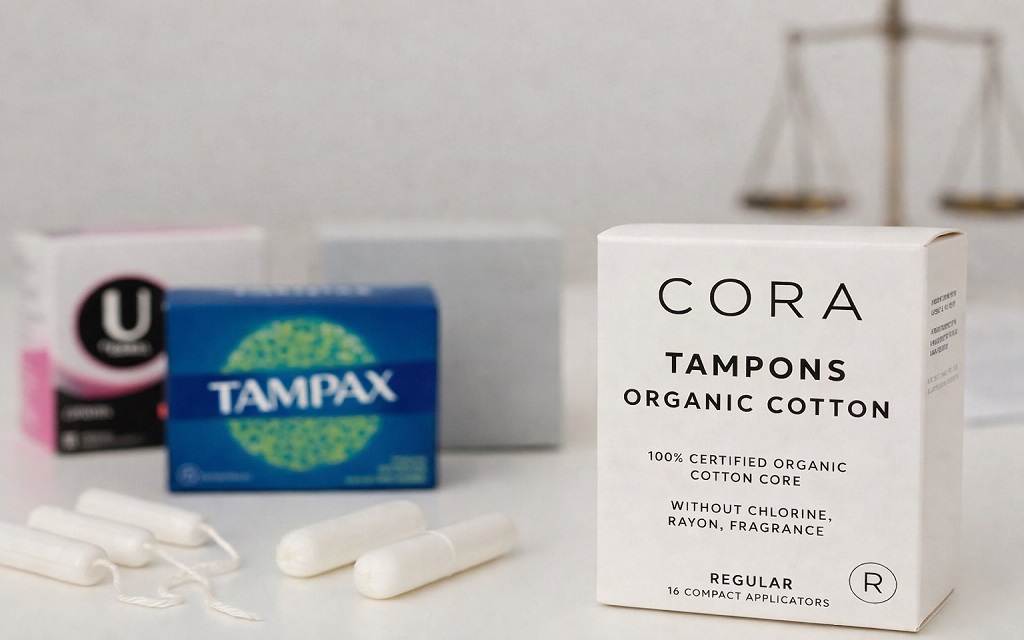
Lawsuits claim some organic tampons, including Cora, may have labeling or product issues. No court has confirmed defects, and cases remain under review.
What the lawsuit is about and what actually happened
You need the facts first. Lawsuits claim that certain tampons marketed as “100% organic cotton” may not meet consumer expectations. Plaintiffs argue that product design and labeling created risk and confusion.
You should look at the two main claims:
- Product defect concerns, such as unraveling during removal
- Misleading marketing under U.S. consumer protection laws
You should also understand the context. Similar claims appear across the organic tampon market. Reports also mention issues involving L. Organic and other brands.
You should take one key insight. Lawsuits do not claim every product fails. They focus on specific incidents and consumer expectations.
What is the latest update on the Cora tampons lawsuit
You should focus on the current status. No final ruling has declared Cora tampons unsafe or defective.
You should understand where the case stands:
- Claims remain allegations
- Courts continue evidence review
- No nationwide settlement announced
You should also note a broader trend. U.S. courts now review “organic” labeling more strictly. That trend affects multiple industries.
You should look at similar litigation patterns. Many consumer lawsuits take years before resolution. Early stages often include motions and evidence collection.
You should take one clear point. The case remains active, not resolved.
Is L. Organic Facing a Lawsuit Over Tampon Claims?
First of all, understand the key point. L. Organic is part of a class action lawsuit that claims its tampons were marketed as “100% organic” but may contain synthetic ingredients.
You should understand the allegations. Plaintiffs claim, according to Top Class Actions, that the front label promotes a natural, chemical-free product. However, the back label reportedly lists substances like paraffin, glycerin, and titanium dioxide.
You should also note a major concern. The lawsuit argues that consumers were misled because key ingredients were not clearly disclosed. Reports also highlight that titanium dioxide is subject to restrictions in parts of the European Union, raising additional safety questions.
Consumers should take one clear insight. The case focuses on false advertising and transparency, not confirmed safety violations.
Are LOLA Organic Tampons Also Facing Lawsuit Claims?
According to Green Matters, LOLA Tampons are also part of a class action lawsuit involving product safety concerns.
Everyone needs to understand the allegations. The lawsuit claims that some tampons may lack a protective layer, which may lead to fiber shedding during use. Plaintiffs argue that this issue has caused irritation, discomfort, and infections in certain reported cases.
You should also note user complaints. Some individuals claim severe pain and say the company knew about concerns but failed to take corrective action.
Consumers take one clear insight. The case remains unresolved, and claims are still under legal review.
Who is affected by this lawsuit?
You should identify the impacted group. Anyone who purchased or used organic tampons may fall within the scope of these claims.
You can break it down:
- Buyers of Cora tampons
- Consumers who relied on organic labeling
- Users who experienced product issues
- Individuals concerned about safety
You should understand the scale. The U.S. feminine hygiene market exceeds $3 billion annually. Millions of consumers use tampons every month.
You should take one insight. Large market size increases the number of potential claims.
Who qualifies to join the lawsuit?
You should understand eligibility clearly. Qualification depends on the facts of each case.
You may qualify if:
- You purchased tampons marketed as organic
- You relied on labeling claims
- You experienced product-related issues
- You have proof of purchase or use
You also need to know how group cases work. A class action lawsuit allows many individuals to file together.
You should take one key point. Evidence matters. Courts require documentation to support claims.
What injuries or issues are being reported
You should look at reported problems carefully. Lawsuits describe several possible issues.
Common allegations include:
- Tampon unraveling during removal
- Fibers remaining inside the body
- Irritation or discomfort
- Infection risk
You should also consider the medical context. Retained material may increase infection risk. Doctors often warn about rare but serious conditions like Toxic Shock Syndrome.
You should understand frequency. Millions of users report safe use. However, even a small number of incidents can lead to lawsuits.
It is important to take a balanced view. Reported issues require proof in court.
What is the current legal status of the case?
You should focus on verified legal facts. Most tampon-related lawsuits remain ongoing.
You should note a key reference case. Manson v. ALYK Inc. highlights claims about unraveling products and misleading labeling.
Also need to understand the legal claims involved:
- False advertising
- Breach of warranty
- Consumer protection violations
- Unjust enrichment
Also consider regulatory oversight. The Food and Drug Administration classifies tampons as medical devices.
You should take one key point. No final judgment confirms liability yet.
Is there any settlement or payout available
It is important to know the current situation. No confirmed settlement exists for the Cora tampon lawsuit.
Need to understand how settlements work:
- Companies may settle without admitting fault
- Courts must approve class action settlements
- Payments depend on claim proof
You should take one key insight. Settlement discussions may happen later, but no payout is available right now.
What you should do if you used these products
You should act step by step. Clear action protects your health and rights.
Follow this plan:
- Seek medical care if symptoms appear
- Keep packaging and receipts
- Document your experience
- Report issues to the Food and Drug Administration
- Speak with a legal professional
You should not delay medical attention. Early care reduces complications.
It is also important to keep records. Documentation strengthens any future claim.
Are Cora tampons safe based on current evidence
You should rely on facts. No court or regulator has declared Cora tampons unsafe.
You should also understand the risk context:
- Most users report normal use
- Lawsuits highlight specific incidents
- Safety depends on correct usage
Follow basic safety steps:
- Change tampons regularly
- Use proper absorbency
- Avoid extended wear
Take one clear view. Products appear safe for most users, but legal claims remain under review.
How does this compare to other organic tampon lawsuits
You should understand the broader trend. Similar lawsuits exist across multiple brands.
You can compare common claims:
- “Organic” labeling disputes
- Product defect concerns
- Consumer deception allegations
You should take one insight. The issue affects the entire category, not just one brand.
FAQs
What is the Cora tampons lawsuit about
You should know it focuses on labeling and product performance claims. Courts have not confirmed defects.
Is there a Cora Pads lawsuit
You should understand the difference. Most claims focus on tampons, not pads.
Can you join the lawsuit?
You may qualify if you purchased the product and experienced issues with proof.
Is there a settlement yet
No confirmed settlement exists at this stage.
Are organic tampons safe?
You should take a balanced view. Most users report safe use, but lawsuits raise concerns that courts are still reviewing.
Final verdict for users
Last but not least, stay informed and cautious. Lawsuits highlight concerns about labeling and product performance. No final rulings confirm defects yet.
You should take a practical approach. Most users do not report issues, but awareness helps you make better decisions.

Musarat Bano is a content writer for JudicialOcean.com who covers lawsuits, legal news, and general legal topics. Her work focuses on research-based, informational content developed from publicly available sources and is intended to support public awareness. She does not provide legal advice or professional legal services.